Deira: Dubai Creek, Trading Streets and Souks
Deira sits on the northern side of Dubai Creek and remains one of the city's most distinctive commercial areas. Its markets, shops and boat connections evoke a trading history very different from the glass towers of Downtown. Yet Deira is not a preserved historic exhibit: people work, commute, shop and live here every day.
The Gold and Spice Souks attract visitors, but the wider district includes busy streets, established communities, transit connections and a range of local services. Exploring it well means looking beyond a single souk entrance. This guide treats Deira as a functioning part of Dubai and explains how the Creek, older commercial routes and modern daily life fit together.
Understanding Deira's Place in Dubai
Dubai's Creek shaped the city's early commercial geography. Deira developed as a place of trade and exchange on one side of the water, with Bur Dubai on the other. Maritime movement and markets helped build connections far beyond the immediate shoreline. Today's city has many additional centres, but that older relationship remains legible in the routes between waterside quays, narrow market streets and commercial premises.
Calling Deira 'old Dubai' can be useful shorthand, but it hides the fact that neighbourhoods evolve. Shops change owners, residents move, and newer buildings stand alongside older patterns of trade. A visitor may arrive for a photograph of an abra or a market; a resident encounters local shops, work journeys, apartment buildings and traffic. Both perspectives matter. Deira's value lies in this lived continuity rather than in the idea that time has stood still.
Dubai Creek and the Abra Crossing
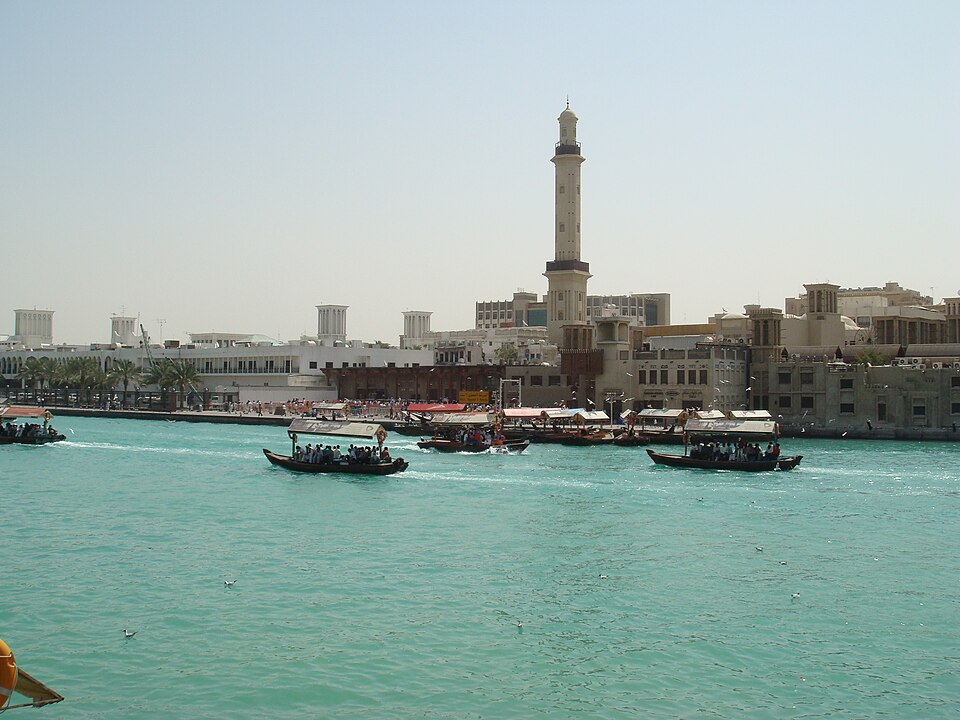
The Creek is more than a backdrop for waterfront photographs. It is a physical divide and a link between districts whose histories grew together. Traditional abra services provide a memorable crossing and allow visitors to see the shoreline from the water. Routes, fares and operating arrangements should be checked with the Roads and Transport Authority before a trip. Allow time to walk at each end instead of treating the crossing as the entire experience.
Looking across the Creek helps make sense of the city's form. Deira's trading streets are close to the water, while areas of Bur Dubai offer another view of older urban life. The pedestrian experience can be busy, particularly around shopping and transport points, so plan for heat and crowds. If travelling with young children or someone with limited mobility, check access at the specific boarding point and consider a route that does not rely on an improvised crossing.
Gold, Spice and Working Markets
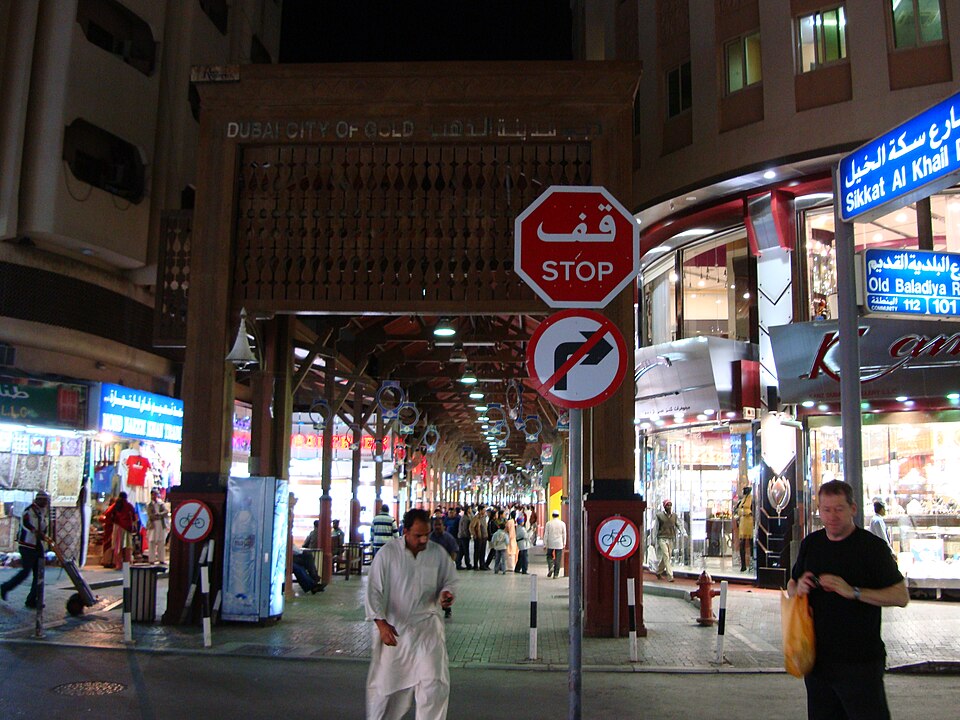
Deira's Gold Souk and Spice Souk are among Dubai's best-known market areas. Displays, small businesses and narrow lanes make for an absorbing visit, even without a purchase. They are active commercial places: vendors are running businesses, and an enjoyable visit should respect their time. Compare products carefully, ask about any documentation relevant to a purchase and do not feel obliged to buy simply because a conversation has begun.
Markets are only part of Deira's commercial story. Everyday retail, food businesses and services serve people who live and work nearby. A route that includes surrounding streets gives more context than a short stop at a famous sign. If you are visiting to learn about the city, pay attention to how goods, people and transport move through the district. That observation offers a better understanding of Dubai's trading identity than a list of must-buy souvenirs.
A Neighbourhood Beyond the Souks
Deira extends beyond the Creek-side markets into established residential and business areas. Apartments, offices, restaurants and community services make different parts of the district feel distinct. Names used in a hotel search may refer to places some distance from the souks. Before booking or viewing a home, check the exact street and nearby transport stops rather than assuming every address in Deira offers an identical waterside experience.
For some households, Deira's practical advantage is its network of everyday shops and connections; for others, crowded roads or limited open space on a particular street may be drawbacks. A district can contain both busy commercial corridors and quieter local pockets. Visit the immediate block at the time you expect to be there most often. An attractive evening walk does not necessarily show what the school run or working commute will feel like.
Getting Around the Creek District
Metro stations, buses, road connections and water transport serve the wider Creek area. The best combination depends on your precise destination. For visitors, using the Metro and an abra can be an effective way to compare the old trading districts with newer centres elsewhere in Dubai. For residents, small details matter: a station on a map might be separated from a building by several streets, and the comfortable walking route can vary by season.
Check the RTA's current map and service notices rather than relying on an old online itinerary. Road journeys toward the airport, Downtown or the western coastal districts change with traffic conditions. If you have a flight or appointment, allow for uncertainty. Deira can be well connected without every trip being quick. Someone who spends most days in Jebel Ali, for example, may find a different residential base more practical despite enjoying the Creek on weekends.
Culture, Food and Respectful Exploration
Walking Deira can reveal an unusually varied mix of food, languages and small businesses. Many people encounter the area first through the souks, but a slower visit creates room for a meal, a waterside pause and an appreciation of ordinary streets. As with any working neighbourhood, be considerate when photographing traders or residents. A busy market is a shared public space, not a set built solely for tourism.
Season and time of day affect the experience. Outdoor walks can be much more comfortable in cooler weather, while opening patterns may differ during holidays and religious observances. Check directly with venues before a special visit. If you want to compare the city across time, pair Deira with Downtown on another day. The contrast is illuminating: both belong to Dubai, but neither can stand alone as its complete story.
Families and School Choices in Deira
Families living in or near Deira should map school journeys carefully. Dubai's private-school system includes different curricula and locations, and KHDA provides official school information and inspection material. Consider a child's age, the availability of places, fee commitments and transport arrangements as well as academic preferences. A school elsewhere in Dubai can be viable, but an apparently short distance may involve a difficult peak-hour route.
Older, denser neighbourhoods can offer convenient daily shopping while presenting different challenges around parking, play space and school drop-off. Visit candidate streets on a weekday and talk to the school about practical arrival arrangements. Our UAE schools-for-sale market page is for readers interested in school transactions, not a substitute for KHDA's guidance to parents. A guide to a neighbourhood can help frame questions, but it cannot decide which institution is right for a family.
Planning a Useful Visit to Deira
Begin with the Creek to orient yourself, then walk into the market streets rather than making a brief stop at a single landmark. Identify the correct water-transport point in advance and consult the RTA for current details. Build in time to observe local businesses without rushing. If your interest is residential, compare the immediate neighbourhood around potential accommodation with the better-known visitor routes; they can tell very different stories.
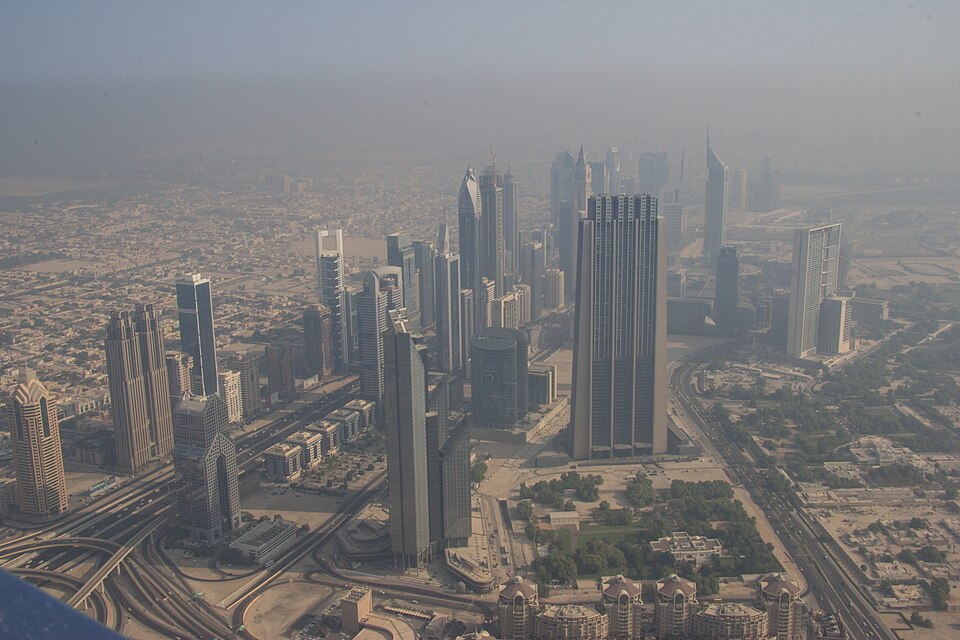
Deira is a reminder that Dubai's international identity was not created only by recent landmark towers. Trade, transport and mixed communities have long shaped the city. Its continuing role deserves attention alongside the skyline. For a broader comparison, read our central Dubai guide and the separate guides to Business Bay and the coastal districts. Use official tourism information for attractions and check any changing practical detail close to your visit.
Reading the Street Rather Than the Stereotype
Deira is frequently introduced as a historic market, which is true but incomplete. A working shop street supports wholesalers, small retailers, commuters and people buying daily essentials. Visit without a checklist and observe how goods are displayed, how customers move and where water crossings meet the road network. The economic activity is visible in ordinary details rather than in one famous sign. This does not mean every lane is a visitor attraction; some are simply places where people earn a living. Respect for that fact improves both the visit and the way the area is described.
The past and present also overlap in ways that resist a simple 'old versus new' narrative. Boats remain part of the Creek scene, yet the surrounding city uses modern transport and commercial infrastructure. A historic trading function can continue in changed premises or through new communities. When comparing Deira with Downtown, ask how each district makes commerce visible and what the pedestrian experience is like. The contrast is informative without suggesting that one place is real Dubai and the other is not.
A local meal or an unhurried walk can reveal more than rushing from the Gold Souk to a taxi. Choose a route that allows you to turn into adjacent streets and notice the businesses serving residents. If shopping, take time to compare quality and terms. Some products require more due diligence than a casual tourist purchase; request the relevant documentation and do not mistake a busy setting for a guarantee of value. The point of a visit can be discovery even when you buy nothing.
A Practical Creek Itinerary
Start with a clear sense of which bank of the Creek you are visiting and how you will return. A crossing can be an enjoyable part of the day, but the route from the landing to a museum, market or station may take longer than expected. Consult official RTA information for the current water service, particularly if travelling late or during a holiday. If you are carrying luggage or travelling with a pushchair, check boarding conditions rather than assuming all points have identical facilities.
The weather affects more than comfort. It can change how long a family can spend in open market streets and whether a second walking district is sensible that day. Plan an indoor break and bring water. Visiting early or later in the day may make sense, subject to the hours of the specific shops you want to see. A more focused route will help you notice the relationship between the Creek, the commercial streets and local life without turning the visit into an exhausting march.
If you are testing Deira as a potential home, return on an ordinary weekday. Find the route to a likely school, observe traffic and ask how often you would use public transport. Note where the shops you need are located, not only the famous souks. A city district can be an excellent place to explore and still be a poor fit for one particular household's routine. That distinction is not a criticism of Deira; it is a necessary part of making a responsible choice.
For readers comparing the Creek with more recent parts of Dubai, note the kinds of public space each offers. A historic commercial lane may be animated by small shops rather than landscaped promenades, while a purpose-built waterfront can offer a different way to spend time outdoors. Neither tells you everything about a neighbourhood's residents. Spend some time looking at shops and transport around an ordinary street, then make the comparison from experience rather than from promotional photographs.
- schools for sale in the United Arab Emirates
- Dubai city and Downtown guide
- Business Bay district guide
- Visit Dubai — Deira neighbourhood guide
Start a confidential conversation with School-sale.com.