Business Bay: Dubai's Canal-Side Business District
Business Bay adjoins Downtown Dubai and is one of the city's most visible high-rise districts. Offices, apartments, hotels and canal-side public space share a compact-looking skyline, but the experience on the ground varies between streets and towers. It is a place for work as well as a residential neighbourhood, not simply an extension of the Burj Khalifa visitor precinct.
Its name suggests a purely commercial area. In reality, daily life here also includes local cafés, evening walks and journeys to nearby parts of the city. This guide looks at the district's layout, what its waterfront offers, how to assess a potential home and why a short distance on a map does not always mean a simple walk.
Where Business Bay Sits
Business Bay lies next to Downtown Dubai and has grown around a mix of towers and the Dubai Water Canal. From a distance its skyline can blend with its neighbour's; at street level the two districts have distinct routes and building patterns. Visitors who want to see both should identify pedestrian crossings, station exits and canal access in advance. A straight-line distance between two towers is not a reliable guide to the walk between their entrances.
The district's position appeals to people who need to reach Downtown, surrounding business addresses or major road corridors. That convenience depends on the precise address, however. A canal-facing apartment, a workplace near a Metro connection and a building reached through a different road junction may involve very different routines. Before committing to a rental or hotel, look beyond the neighbourhood name to the route you will actually take.
The Dubai Water Canal
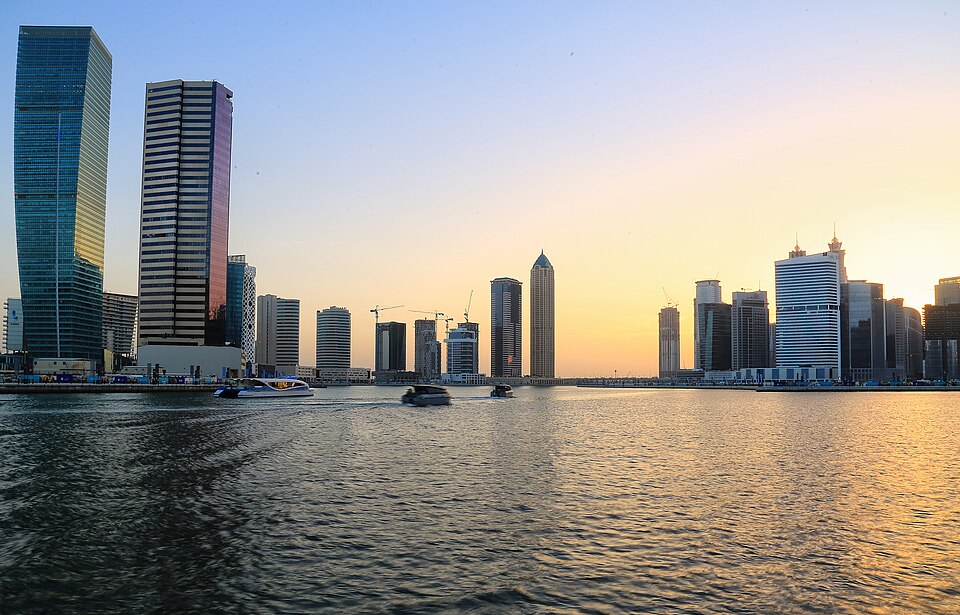
The Water Canal gives Business Bay a visual identity beyond office towers. Its waterside stretches offer a different pace from nearby traffic, with bridges, views and places to walk. Access varies by location, so check how a particular building connects to the public route rather than assuming every canal-facing property has direct promenade access. At comfortable times of year, the waterfront can become part of a resident's everyday walking circuit.
A photograph of the canal often shows a polished evening scene, but a useful neighbourhood visit includes ordinary daytime conditions. Consider shade, seating, road crossings and whether the route connects to the destinations you need. The canal should be understood as public infrastructure and urban space rather than a guarantee that any home on its wider map will feel quiet. Nearby roads and construction can affect the experience at individual addresses.
A District Built for Work and Residence
Business Bay's blend of offices and homes gives it a rhythm that changes through the day. Morning commuting, lunch trade and evening activity may be concentrated in different streets. Some buildings are primarily residential; others accommodate business visitors or hotel guests. If you are considering a home, inspect the lobby, surrounding block and nearby services at more than one time. Building facilities alone cannot tell you what the wider neighbourhood will feel like.
A working district can suit people who want a short commute and a lively urban setting. It may feel less suitable to someone seeking a low-rise garden environment or extensive open space immediately outside the door. There are no universal 'best' towers: maintenance, access, orientation and nearby development all matter. Think about the everyday route to groceries, healthcare and a place to spend time outdoors, not only the quality of an apartment view.
From Business Bay to Downtown
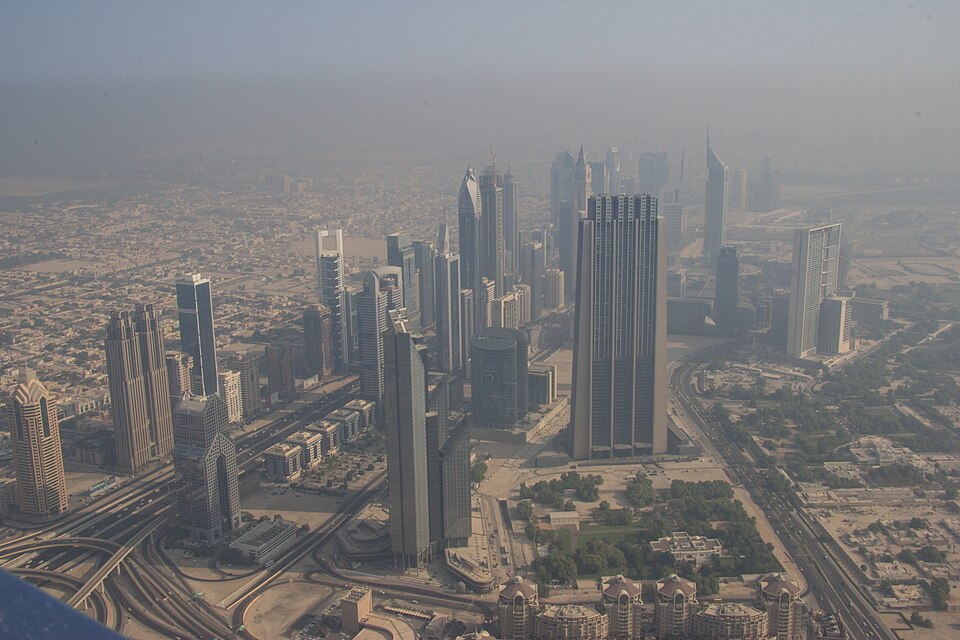
Downtown's major attractions are close enough to make the two districts natural companions, but the connection is not identical from every starting point. Depending on the street, a visitor may prefer to walk, take public transport or use a taxi. Use actual routes and pedestrian facilities when planning, particularly during the hotter months. The Burj Khalifa skyline may look close from a balcony while the ground-level journey takes a different direction.
Business Bay offers a useful base for seeing contemporary Dubai without sleeping directly within Downtown's busiest visitor core. Yet its character should not be reduced to spillover from a neighbour. Its offices, residences and canal give it a separate purpose. Compare the two at different times of day to decide which atmosphere suits your needs. Readers interested in older trading areas should also make a separate trip to the Creek rather than assuming central Dubai is all high-rise.
Transport and Realistic Commutes
The Business Bay Metro station sits on Dubai's Red Line, and the Roads and Transport Authority provides current maps and service information. Not every address with 'Business Bay' in its name is equally close to the station. The walk from a platform to a building may involve long blocks and exposed stretches. Road connections are useful but subject to traffic, especially at peak times; a site visit during the real commuting period is more revealing than a static map.
For a household with several destinations, test each one independently. Work may be nearby while school is across the city, or vice versa. Evening travel can also differ from a morning journey. If accessibility is important, inspect step-free routes, crossings and transport changes directly rather than relying on an aerial map. Urban convenience is not a single travel-time number: it is the combined effect of routes, reliability, weather and your own daily schedule.
Families and Neighbourhood Choices
Business Bay's apartment-led housing appeals to some families who value central access and building facilities. Others may prefer communities with larger outdoor spaces or school campuses closer to home. Dubai's private-school regulator, KHDA, publishes information about schools and inspections, while individual schools confirm admissions and transport. Consider a child's full day: getting to class, returning after activities and finding time to play are all part of the location decision.
A school near Downtown does not automatically make every Business Bay tower a convenient base. The drop-off route and school transport options matter. If relocating, ask about curriculum alignment, year groups and the practical arrangements for a child joining during the academic year. Readers interested in school ownership rather than enrolment can consult our UAE schools-for-sale guide, which addresses a different set of regulatory and commercial questions.
What to Check Before Choosing a Building
Look at the exact location, recent condition of shared spaces, pedestrian access and the services you would use weekly. Ask whether construction nearby affects routes or noise, and look at the building from the street rather than only from a listing photograph. A canal view may be appealing, but daily essentials can be on the opposite side of a busy road. Parking arrangements and lift capacity may also matter for a busy tower.
If you are visiting as a tourist, match accommodation to your likely itinerary. A place near the Metro may simplify some journeys, while a canal-side hotel may be preferable for an evening walk. If you are moving for work, try the office commute at the usual time and visit local shops before deciding. Official visitor and transport information can orient you, but the smallest details of building and street are best checked in person.
Seeing Business Bay in Context
One good way to understand Business Bay is to walk a safe, planned part of the canal, then compare its working towers with Downtown's landmark public spaces. The historic Creek and Deira provide a further contrast: commercial activity has been part of Dubai for generations, but the city expresses it through very different built environments. Business Bay is one chapter in that story, not a replacement for the others.
Use official Dubai tourism material for current attractions and RTA guidance for journeys. Businesses, restaurants and access arrangements can change. A well-informed visit combines those sources with time on the ground. Whether the district is right for you depends less on its reputation than on the precise location, the people in your household and the routes that shape an ordinary week.
Seeing Beyond the Skyline
Business Bay is often photographed from a viewpoint that turns many towers into one dramatic silhouette. At ground level, their differences become more important. Some streets lead naturally toward the canal, while others are shaped by traffic or building podiums. Hotel, office and residential entrances can face different directions even within the same block. If the neighbourhood interests you, walk a short route linking a station or drop-off point, a prospective building and an everyday service. That route is a more useful measure of convenience than the fact that both landmarks appear in the same photograph.
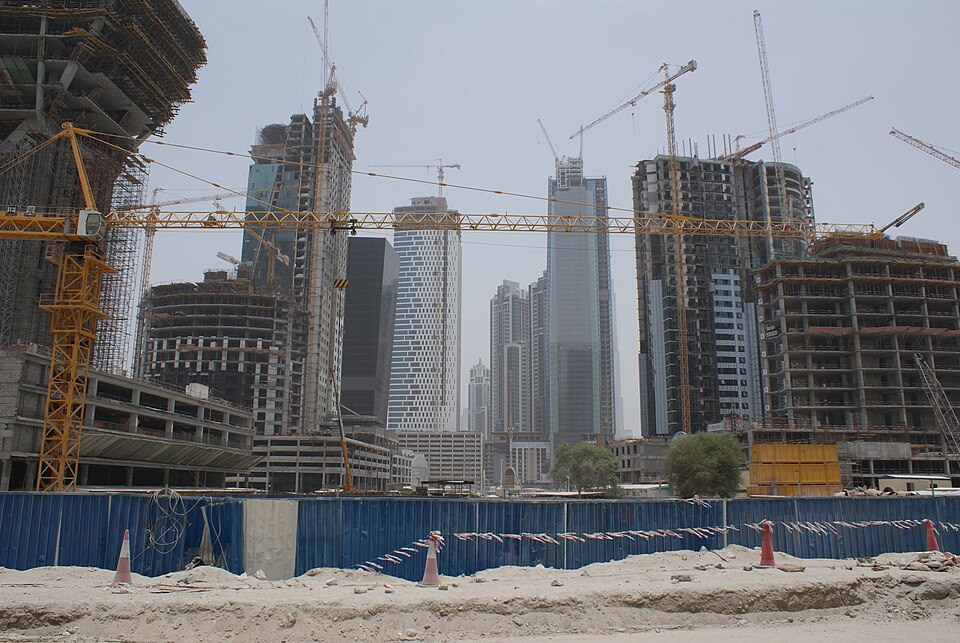
The district has changed over time, and images from earlier phases of construction can be mistaken for a current representation. In this guide an archival photograph is labelled as an earlier stage; it is not a claim that every site remains under construction. The reverse mistake is also possible: a recent polished image does not prove a particular building or nearby footpath is finished. Verify the immediate environment in person or through current official information before making a decision.
An apartment with canal views may have an excellent outlook but different daylight, noise or thermal conditions from another unit in the same building. Ask about orientation, shared services and management. If working from home, consider where you would take a daily walk and whether nearby cafés or quiet public spaces fit the schedule. The appeal of Business Bay is its urban mixture; the quality of a specific address depends on details that the district name cannot convey.
Planning a Week Around Business Bay
Imagine a normal week rather than a single leisure evening. Where would you go on a workday morning, after-school afternoon, supermarket run and quiet weekend? Business Bay can make access to Downtown easy, yet another regular destination might be across the city. Draw each route separately. A parent may find the school journey more influential than an employee's office commute. A visitor may value the Metro for sightseeing but still want a taxi for a late return.
The canal can be a valuable recreational route, although different sections have different access and levels of activity. Check whether the part near a prospective building is comfortable for the kind of walk you expect to take. Are there suitable crossings and shaded places to pause? Does the route return easily to your street? The existence of waterfront space does not mean every home offers the same experience of it.
Business Bay also works as a useful comparison point for other Dubai districts. Marina puts more emphasis on a concentrated boat-filled waterfront. Deira's older commercial streets have a different scale. Al Quoz mixes cultural spaces with industrial work. Seeing two or three of these places helps clarify whether Business Bay's particular combination of towers, offices and water feels energising or demanding to you. There is no answer that applies to every resident.
If you are visiting for a meeting, distinguish the office address from the district as a whole. Tower names can sound similar, and an appointment near the canal may have a different entrance from a neighbouring hotel. Confirm the building, reception and route in advance. The same precision is important for a residential viewing: compare the building's maintenance and actual street access with several alternatives. A central location is valuable only when the particular address supports the way you intend to use it.
- schools for sale in the United Arab Emirates
- Downtown Dubai city guide
- Dubai Marina waterfront guide
- Visit Dubai — Business Bay guide
Start a confidential conversation with School-sale.com.